

Livebroadcasting India runs multi-camera live stream production for events across Delhi NCR — corporate conferences, weddings, election rallies, sports, product launches, and more. We bring our own broadcast cameras, switchers, and encoders on site, run backup internet connectivity alongside the primary line so one dropped connection doesn’t take the stream down, and push a simulcast feed to YouTube, Instagram, Facebook, and private branded pages from a single production. Every stream is recorded and edited in-house, so you have an on-demand version ready within days of the event.

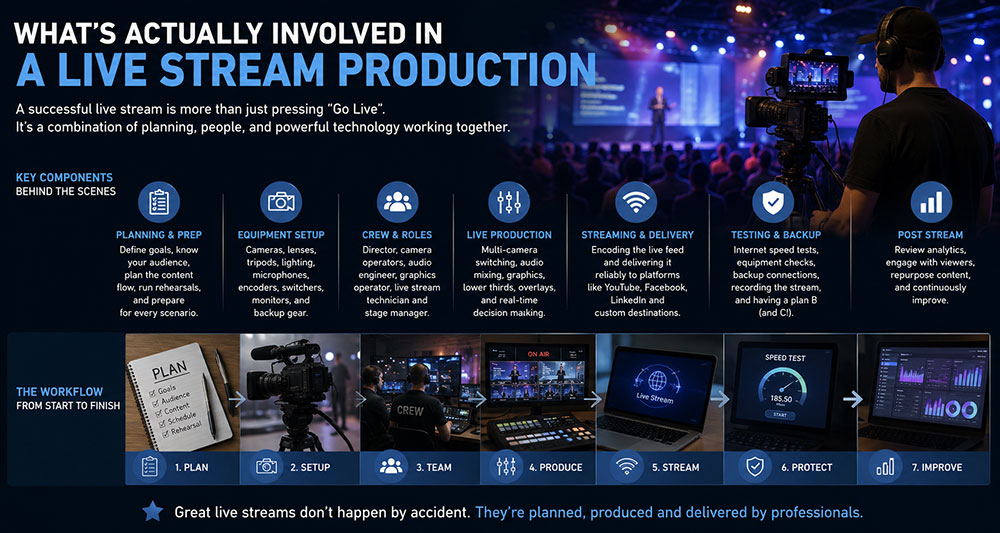
What's Actually Involved in a Live Stream Production
A “live streaming service” is really five separate jobs happening at once. Here’s what each one covers and why it matters:
Cameras and switching
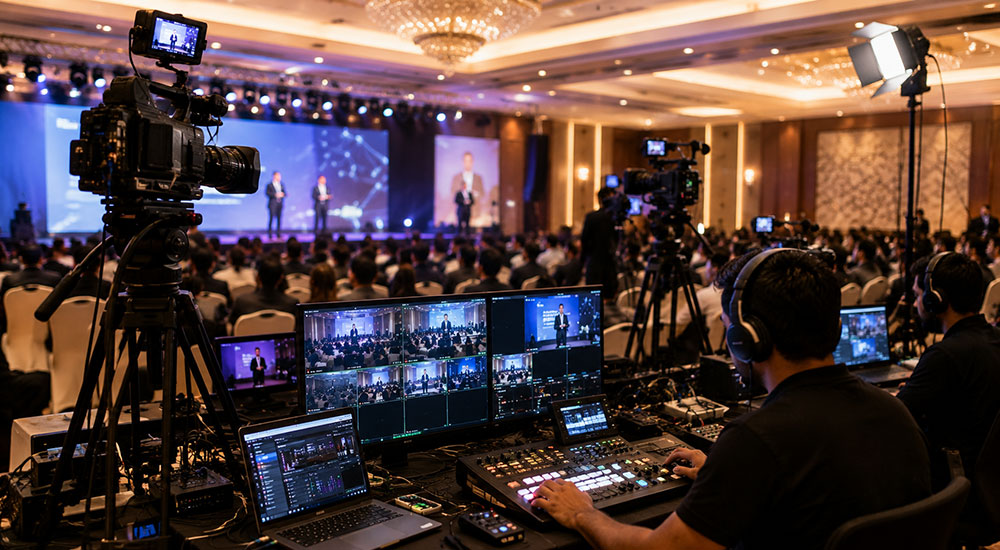
A single locked-off camera works for a small internal briefing. Anything with a stage, a panel, or more than one point of interest needs two to four cameras and a live switcher, so the feed cuts between a wide shot, a speaker close-up, and audience or slide coverage in real time — the same way a TV broadcast is cut, not a static webcam recording.
Audio
This is where most amateur streams fail, and it’s rarely the video. A camera’s built-in mic picks up room echo and distance noise. We run wired lapel or handheld mics into a dedicated audio mixer, independent of the camera, so the sound is clean regardless of how far the camera sits from the speaker.
Encoding and bitrate
We encode at multiple bitrates so a viewer on a strong office connection gets full HD, and a viewer on a weak mobile signal gets a lower-resolution feed that keeps playing instead of freezing or buffering out entirely. A single fixed-bitrate stream looks great until someone’s connection dips — then it just stops.
Connectivity redundancy
The single most common reason a live stream goes down mid-event isn’t equipment failure — it’s relying on one internet connection. We run a primary wired or broadband line plus a backup bonded-cellular connection, with automatic failover, so a dropout on one doesn’t take the broadcast offline.
On-site crew
Beyond camera operators, every shoot has a dedicated stream technician watching the outgoing feed, bitrate, and platform connections throughout — a separate job from operating a camera, and the one that catches problems before your audience does.
Post-production
The same footage that goes out live is recorded in full. Our in-house editing team turns it into a highlight cut or complete on-demand video, typically delivered within a few days of the event.
Events We Cover Across Delhi NCR
Corporate events & conferences
panels, all-hands, product reveals, AGMs, hybrid events with an in-room and remote audience.
Weddings
multi-day, multi-venue coverage for family who can’t travel, from the baraat through the reception, indoors and outdoors on the same shoot.
Elections and political rallies
large-crowd coverage, multiple camera positions, and feeds set up to be pooled or shared with press.
Sports and motorsports
longer-lens coverage, replay capability, and scoreboard or timing graphics overlaid on the live feed.
Educational events and webinars
large-crowd coverage, multiple camera positions, and feeds set up to be pooled or shared with press.
Town halls
audience Q&A integrated into the stream, useful for large organizations addressing a distributed workforce.
Cultural and religious events
long-duration coverage for ceremonies and festivals, often streamed to a private or invite-only audience.
Product launches
tighter production value with graphics, multi-camera cuts, and simultaneous delivery across platforms.
Funeral services
a small, discreet crew and a private viewing link for family and friends who can’t be there in person. No production flourishes — just a stable, respectful feed.
Where Your Stream Can Go
We deliver to YouTube Live, Instagram Live, Facebook Live, and Twitch, and can simulcast to several of these simultaneously from the same production — one shoot, multiple destinations, rather than separate crews per platform. For closed events (board meetings, internal briefings, invite-only ceremonies), we set up a private branded viewing page instead of a public platform. We also cut a vertical version for social where that’s useful, and deliver multiple-bitrate streams so viewers on different connection speeds all get a stable feed.
Why Streams Actually Fail in Delhi — And How We Prevent It
Most of what causes a live stream to fail has nothing to do with the streaming software. It’s the physical conditions on site:
Venue power isn’t always stable
especially at banquet halls and outdoor lawns running on shared or generator power. We run our own battery backup for cameras, switchers, and encoders so a power flicker doesn’t cut the stream.
Relying on the venue’s WiFi is a common mistake
particularly at large convention or exhibition venues where hundreds of devices are competing for the same bandwidth. We run a dedicated wired connection wherever possible, with cellular failover as backup.
Outdoor events in monsoon season need weatherproofed gear
and covered positions for the switcher and encoding equipment — not just the cameras.
Skipping the rehearsal is the fastest way to have a problem in front of a live audience
We insist on a tech check before doors open: audio levels, camera positions, connectivity, and a test stream to the actual destination platform.
What It Costs
Live streaming pricing in Delhi is driven by a handful of concrete factors, not a flat rate: number of cameras and crew, single-day versus multi-day coverage, how many platforms you’re streaming to at once, whether you need a private branded page, and turnaround time on the edited video afterward. Across the Delhi NCR market, single-camera coverage for a straightforward event typically starts in the ₹15,000–₹25,000 range, while multi-camera production with a dedicated switcher, backup connectivity, and same-day editing usually starts upward of ₹40,000, scaling with crew size and event length. The only way to get an exact number for your event is a quote based on your date, venue, and camera count
How We Run a Shoot
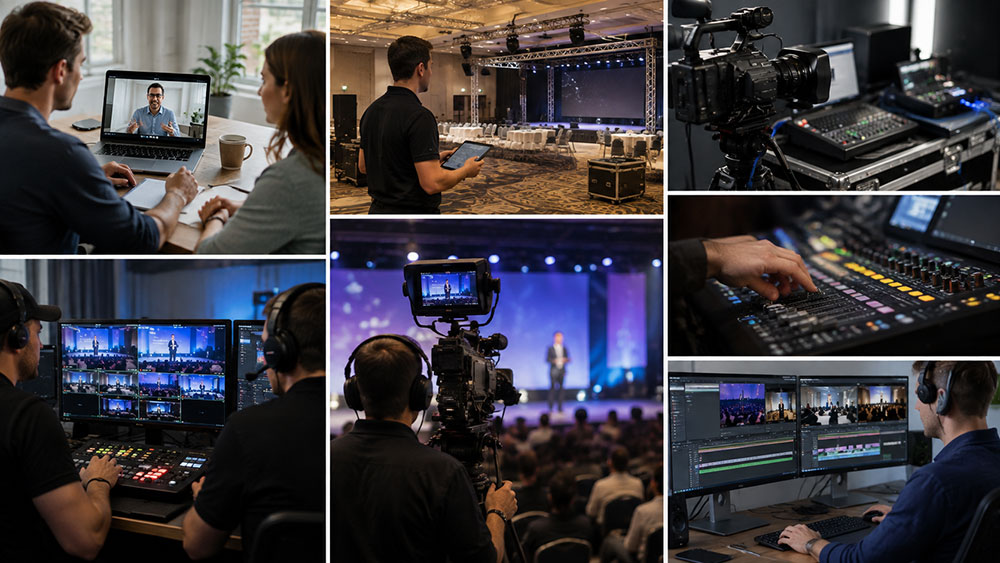
- Discovery call — event type, date, expected audience, and which platforms you need to reach.
- Venue technical survey — checking available internet, power access, and viable camera positions ahead of the event.
- Equipment and crew plan — camera count, audio setup, and connectivity plan finalized against the venue survey.
- Pre-event tech check — full rehearsal with audio levels, camera framing, and a live test stream to the destination platform before doors open.
- Live production — on-site crew running cameras, switching, and stream monitoring throughout, with backup connectivity active the whole time.
- Edited delivery — the recorded footage is edited in-house and delivered as a highlight cut or full on-demand video within a few days.
FAQ,s
How much does live streaming cost in Delhi?
It depends mainly on camera count, crew size, event duration, and how many platforms you’re streaming to. Single-camera coverage typically starts around ₹15,000–₹25,000 per event; multi-camera productions with backup connectivity and editing usually start upward of ₹40,000. Get an exact quote based on your event details.
How many cameras do I need for my event?
A single fixed camera is enough for a small briefing with one speaker. Anything with a stage, panel, multiple speakers, or an audience worth showing generally needs two to four cameras with live switching to hold viewer attention.
What internet speed do I need to live stream an event?
For a stable HD stream, we generally look for at least 10–15 Mbps of reliable upload speed at the venue, with a backup connection available. Venue WiFi alone is usually not enough for a multi-camera production — a dedicated wired line is preferred.
What happens if the venue's internet or power goes down mid-stream?
We run backup connectivity (bonded cellular failover) alongside the primary internet line, and battery backup for the camera and switching equipment, so a single point of failure doesn’t take the broadcast offline.
Can you stream to YouTube, Instagram, and Facebook at the same time?
Yes. We simulcast to multiple platforms from the same production, so you don’t need separate crews or separate shoots for each destination.
Do you provide the recording after the live stream?
Yes. Every stream is recorded in full during the live broadcast, and our in-house editing team delivers an edited highlight cut or complete on-demand video, typically within a few days.
Do you cover events outside Delhi, like Gurugram or Noida?
Yes, we cover events across Delhi NCR, including Gurugram and Noida.
Can a wedding or funeral be live streamed privately, instead of on a public platform?
Yes. For events where you don’t want a public link, we set up a private branded viewing page that’s only accessible to people you share it with, rather than streaming to a public YouTube or Facebook page.
How far in advance should I book?
For a standard single-camera event, a week’s notice is usually enough. For multi-camera productions or events at large venues needing a technical survey beforehand, we recommend booking at least 2–3 weeks out.