
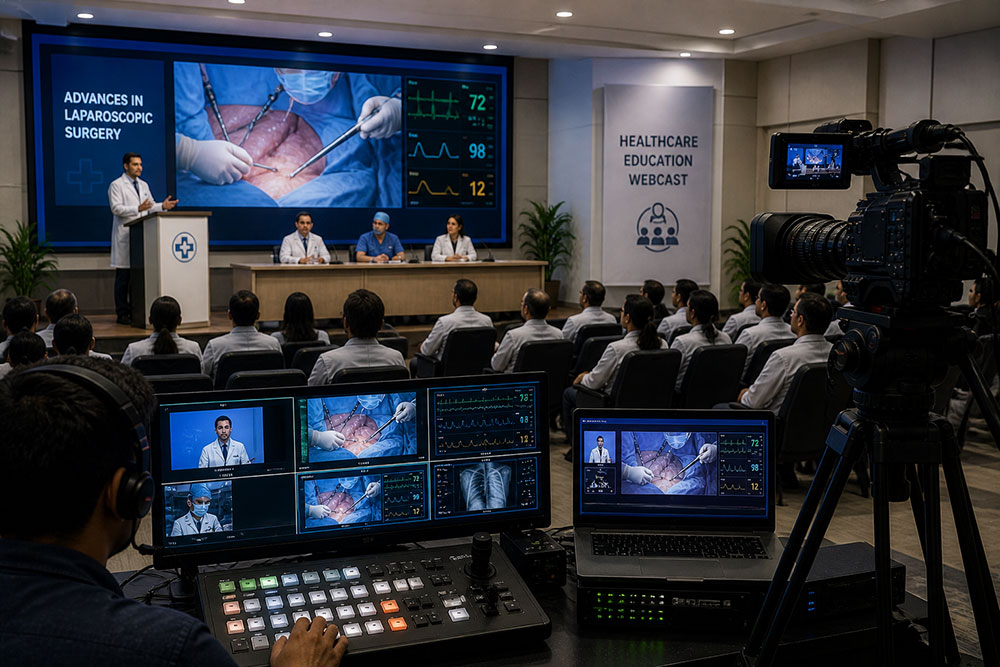
Medical webcasting has become an essential tool for healthcare professionals, hospitals, and institutions. From webinars to live surgeries and medical conferences, high-quality and secure streaming is critical.
Why Medical Webcasting is Important
Healthcare professionals rely on live streaming to share knowledge, conduct training, and connect with global audiences. However, maintaining privacy and quality is crucial.
Key Challenges in Medical Streaming
– Patient data privacy
– Compliance with regulations
– High-quality video and audio requirements
– Reliable connectivity
Ensuring Privacy in Medical Webcasting
1. Use Secure Platforms
Choose platforms that offer encryption and secure access controls.
2. Access Control
Restrict access using passwords, login credentials, or invitation-only links.
3. Data Protection
Ensure compliance with regulations like HIPAA and local data protection laws.
4. Avoid Sharing Sensitive Information
Always anonymize patient data and avoid displaying identifiable details.
Maintaining High Streaming Quality
1. Professional Camera Setup
Use high-definition cameras for clear visuals.
2. Clear Audio
Use lapel or condenser microphones for accurate sound capture.
3. Stable Internet
Ensure high-speed internet with backup connectivity.
4. Lighting Setup
Proper lighting improves clarity, especially for surgical or clinical demonstrations.
Best Practices
– Conduct test runs before live sessions
– Have technical support on standby
– Record sessions for later use
– Use multiple camera angles if needed
Conclusion
Medical webcasting requires a balance between advanced technology and strict privacy measures. By following best practices, healthcare providers can deliver secure and high-quality streaming experiences.
