
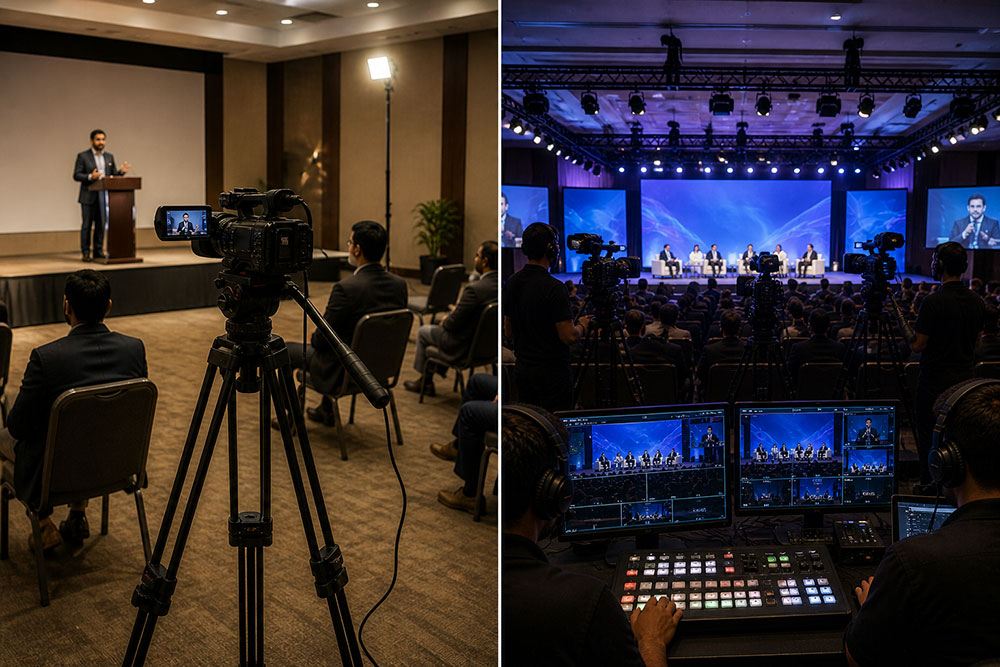
When planning a product launch, one of the most important decisions is choosing between a single-camera or multi-camera setup. The right choice can significantly impact audience engagement, production quality, and brand perception.
What is Single-Camera Streaming?
A single-camera setup uses one camera to capture the entire event. It is simple, cost-effective, and suitable for smaller or low-budget events.
Advantages of Single-Camera Setup
– Lower cost
– Easy to set up
– Minimal technical requirements
– Ideal for small webinars or internal events
Limitations of Single-Camera Setup
– Limited angles
– Less engaging visuals
– No dynamic storytelling
What is Multi-Camera Streaming?
A multi-camera setup uses multiple cameras to capture different angles and perspectives, creating a more dynamic and professional experience.
Advantages of Multi-Camera Setup
– Professional production quality
– Better audience engagement
– Multiple viewing angles
– Real-time switching for storytelling
Limitations of Multi-Camera Setup
– Higher cost
– Requires skilled crew
– More complex setup
When to Choose Single-Camera
– Small-scale launches
– Budget constraints
– Internal presentations
– Quick setup requirements
When to Choose Multi-Camera
– Large product launches
– Brand-focused events
– High audience engagement goals
– Corporate or media coverage
Key Factors to Consider
1. Budget
2. Audience size
3. Platform (social media vs private event)
4. Production quality expectations
5. Brand image
Conclusion
Both single-camera and multi-camera setups have their place. The right choice depends on your goals, budget, and audience expectations. For impactful product launches, multi-camera setups often deliver superior results.
