
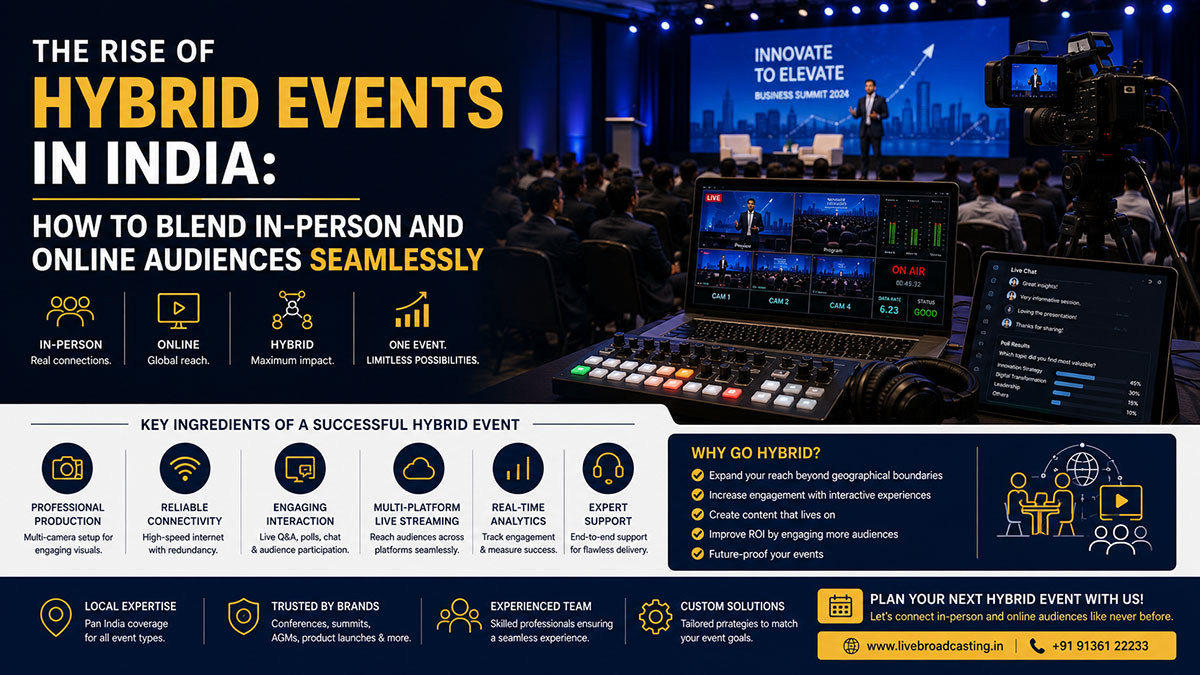
A hybrid event in India serves two audiences simultaneously: people in the room and people watching online. Done well, both experiences feel first class. Done poorly, the online audience feels like an afterthought — watching a distant, poorly lit stage while the real energy happens somewhere they cannot access.
What Is a Hybrid Event?
A hybrid event combines physical attendance at a venue with simultaneous online participation from remote attendees. The defining characteristic of a true hybrid event is that the online audience can interact with the programme — they can ask questions, participate in polls, vote, respond to presentations, and feel part of the proceedings rather than passive observers.
The Core Challenge — Serving Two Audiences Equally
The biggest mistake organisations make with hybrid events is treating the live stream as secondary to the in-person experience. A genuinely hybrid event is designed with camera positioning and streaming quality as primary production considerations, not afterthoughts.
Designing for Camera First
This means: lighting rigs designed to work for both the room and the camera, stage design that is visually interesting from multiple camera angles, presenters briefed on looking at cameras as well as the live audience, and content formats that work for online as well as in-person participants.
The Engagement Gap Problem
Online audiences have a much lower tolerance for passive observation than in-room audiences. The solution is to design regular interaction touchpoints: live polls every 20-30 minutes, dedicated Q&A windows where online questions are read and answered on stage, and real-time chat moderation that surfaces the best online contributions.
Technical Infrastructure for Hybrid Events in India
Live Streaming Production
A minimum of two to three cameras — with a dedicated technical director cutting between them — produces an experience that online attendees find genuinely engaging.
Interactive Platform
The streaming platform needs to support interactivity: live chat moderation, polling, Q&A submission, and registration data for analytics.
Audio Return for Remote Speakers
Many hybrid events include remote speakers who join via video call. This requires a professional audio return system that allows remote speakers to hear the room clearly and be heard clearly by the audience.
Measuring Hybrid Event Success
Key metrics for the online audience include: peak concurrent viewers, average watch time, drop-off points in the programme, poll participation rates, Q&A submission volumes, and geographic distribution of viewers.
Frequently Asked Questions
Q: What is the difference between a hybrid event and a webinar?
A webinar is a purely digital event with no physical audience. A hybrid event has a live in-person audience and a simultaneous online audience. The production complexity of a hybrid event is significantly greater.
Q: How much does hybrid event production cost in India?
Entry-level hybrid productions for small conferences start from approximately Rs.75,000-Rs.1,00,000. Full-scale productions for national conferences are priced based on scope.
Q: How do I keep online attendees engaged during a long hybrid event?
Schedule regular interaction touchpoints — polls, Q&As, and audience responses — every 20-30 minutes. Appoint a dedicated digital engagement producer to moderate the online audience.
